How to Pay for Flight School: Smart Ways to Fund Your Pilot Training
Figuring out how to pay for flight school doesn't have to ground your dreams. Explore scholarships, lesson-by-lesson budgeting, and training structures that keep costs manageable.

How to Pay for Flight School Without Breaking the Bank
Figuring out how to pay for flight school is the number one thing that stops would-be pilots from ever leaving the ground. The cost looks intimidating at first glance. But when you break it down into lessons, not lump sums, the path becomes much more manageable than you think.
This guide walks you through every realistic option: paying lesson by lesson, finding scholarships, using credit wisely, leaning on family or employer support, and choosing a training structure that keeps your total costs low. By the end, you will have a clear plan instead of a looming question mark.
Why Flight Training Costs Feel So High (And Why They Don't Have To)
Flight training costs real money. There is no sugarcoating that. However, a lot of the sticker shock comes from how some schools package and sell their programs.
Many large flight academies ask you to pay $10,000 or more upfront for a training block. They call it a "block rate" or a "training package." If the school closes, changes ownership, or simply doesn't work out for you, that money is often gone. The FAA has issued consumer guidance warning students about prepaying large amounts to flight schools precisely because of this risk.
The smarter move is to find a training structure where you pay per lesson, for exactly the time that goes into your logbook.
What "Hobbs Time" Means and Why It Saves You Money
A Hobbs meter (pronounced "hobs") is a clock inside the aircraft that runs only when the engine is on. When you train with independent instructors who bill on Hobbs time only, you pay for engine-on flight time and nothing else.
Pre-flight briefings, post-flight debriefs, and lesson planning done on the ground? Those carry no extra charge. You are not paying for an instructor to sit across a table from you and talk. That approach can save you hundreds of dollars over the course of a full Private Pilot certificate.
At Aces Aviators Academy, billing works exactly this way. Instruction is $40 per hour. Club aircraft (Cessna 152s and Cessna 172s, for example) rent through participating flying clubs from $120 per hour wet on Hobbs time. That combination keeps your per-lesson cost predictable.
A Realistic Budget: What Each Lesson Actually Costs
Let's put real numbers on a typical lesson so you can plan properly.
A standard dual instruction flight (that means flying with your instructor in the airplane) might run 1.2 Hobbs hours. Here is what that looks like:
- Instructor fee: 1.2 hours x $40/hr = $48
- Cessna 152 rental: 1.2 hours x $120/hr = $144
- Total for that lesson: $192
A Cessna 172 with GPS navigation (useful for cross-country training) rents for $160 per hour wet. A simulator session on the Redbird FMX full-motion simulator runs $80 per hour with instruction and simulator fees included, and counts toward your required training hours in many categories.
The FAA's Airman Certification Standards require a minimum of 40 flight hours for a Private Pilot certificate, though the national average is closer to 60 to 70 hours. Planning for 60 hours gives you a realistic budget target without setting you up for surprise costs.
For a 60-hour plan using a mix of aircraft and simulator time, total training costs at a Hobbs-time-only school can stay well under $15,000 when instruction rates are competitive. That is significantly lower than many Part 141 academies that bundle overhead into their pricing.
How to Pay for Flight School: Scholarships Worth Applying For
Yes, aviation scholarships are real. Yes, people actually win them. The flight training community awards millions of dollars in scholarship money every year, and a large share of it goes to students who simply took the time to apply.
Here are three places to start:
AOPA (Aircraft Owners and Pilots Association): The AOPA Foundation You Can Fly Scholarship program funds student pilots at various stages of training. Some awards go directly toward flight hours.
EAA (Experimental Aircraft Association): The EAA offers multiple scholarship programs through its Ray Aviation Scholarship and other funds. Awards range from a few hundred dollars to several thousand.
Women in Aviation International: WAI administers dozens of scholarships specifically for women pursuing pilot certificates, including awards for Private, Instrument, and Commercial ratings.
A few practical tips for scholarship applications:
- Apply early. Most deadlines fall in the winter months for awards given in spring.
- Write a specific personal statement. Generic essays lose.
- Apply to multiple programs at once. There is no penalty for stacking awards.
- Ask your instructor to write a strong letter of support.
Even a $1,500 scholarship covers roughly eight to ten lessons. Over a full training timeline, two or three small awards add up to a meaningful chunk of your total bill.
Personal Loans and Credit: Use Them Carefully
Borrowing money to fund pilot training is a reasonable option when used thoughtfully. The key word is thoughtfully.
A personal loan from a credit union or bank often carries a lower interest rate than a credit card. If you know you will need $8,000 to $10,000 over six to twelve months, a personal loan lets you lock in a rate and pay it back in predictable installments. Shop around. Credit unions frequently offer better terms than traditional banks.
Credit cards are flexible but expensive if you carry a balance. However, if you use a rewards card responsibly and pay it off monthly, you can earn cash back or travel points on lessons you were paying for anyway. Some pilots use this strategy intentionally. Just do not let the balance grow beyond what you can pay.
Avoid any school that requires you to put a large upfront deposit on a credit card. That structure protects the school, not you.
A Note on Family Loans and Gifts
Family support is more common in flight training than people admit publicly. A parent, grandparent, or spouse who believes in your goal might offer an interest-free loan or a gift toward a milestone. There is no shame in accepting that support graciously.
If you structure it as a loan, put it in writing. Agree on a repayment schedule. That protects the relationship and keeps expectations clear on both sides.
Employer Support: An Underused Option
More employers than you might expect will support pilot training, especially if flying connects to your job or professional growth. Agricultural businesses, real estate companies, corporate travel, aerial survey, and inspection industries all have reasons to employ pilots.
Talk to your employer honestly. Frame it around how the skill benefits them, not just you. Ask about tuition reimbursement, professional development funds, or even an informal arrangement where they cover costs in exchange for future service.
Even outside aviation-adjacent industries, some employers offer professional development budgets that have no restrictions on what kind of skill you are building. It is worth a conversation before you assume the answer is no.
How to Pay for Flight School by Paying Lesson by Lesson
The most straightforward answer to how to pay for flight school is also the simplest: pay as you go, one lesson at a time.
This approach works because it matches your spending to your actual progress. You do not write a check for training you have not done yet. You pay after each lesson, or in small batches, based on what is in your logbook.
To make pay-as-you-go work:
- Set a monthly training budget you can sustain without stress. Even $400 to $600 per month keeps you moving forward.
- Fly consistently. Two lessons per week builds skills faster than one lesson every few weeks, which means you reach your certificate with fewer total hours wasted on relearning.
- Use simulator time strategically. At $80 per hour on a full-motion Redbird FMX, simulator sessions are cheaper than aircraft time and excellent for instrument procedures, emergency training, and bad-weather practice.
- Track every lesson. Know your running total so you are never surprised.
Slow and steady, funded by your regular income, is a legitimate path. Many working adults finish their Private Pilot certificate in twelve to eighteen months this way.
Why Independent Instruction Keeps the Total Lower
Large flight academies carry large overhead costs: marketing departments, shiny waiting rooms, administrative staff, and branded fleet aircraft with loan payments attached. Those costs get baked into your hourly rate whether you see them or not.
Independent FAA-certified flight instructors operating under 14 CFR Part 61 (the flexible, lesson-by-lesson regulation) can price their time based on what they actually cost to operate. At $40 per hour for instruction, you are paying for expertise, not overhead.
Flying club aircraft adds another layer of savings. Flying clubs are member organizations, not businesses trying to generate profit on each rental. That structure keeps hourly rates lower than a fleet owned outright by a school.
Aces Aviators Academy operates exactly this model in Southern California's Inland Empire. Independent instructors, club aircraft, Hobbs-time billing, and no large upfront deposits. You can review the full pricing structure here to see what each phase of training actually costs.
Avoiding the Biggest Financial Mistake in Flight Training
The single biggest financial mistake student pilots make is prepaying a large training block at a school they have not thoroughly vetted.
Schools close. Instructors leave. Management changes. If your money is already in the school's account, you may have limited recourse. The FAA itself recommends that students research schools carefully and understand refund policies before paying anything substantial.
Protect yourself by:
- Never paying more than two or three lessons in advance
- Getting refund policies in writing before you pay anything
- Asking what happens to prepaid funds if an instructor leaves
- Choosing schools that bill on Hobbs time with no large deposit requirements
If a school makes you feel pressured to commit a large amount upfront to "lock in your rate," that is a red flag worth taking seriously.
Take Your First Step: The Discovery Flight
Knowing how to pay for flight school is only useful if you actually start. A discovery flight is the lowest-risk, lowest-cost way to confirm that flying is right for you before you commit to a full training program.
At Aces Aviators Academy, a discovery flight is $160. You fly with an FAA-certified instructor, take the controls yourself, and experience real flight firsthand. It counts toward your logbook. It answers the question of whether this is something you want to pursue.
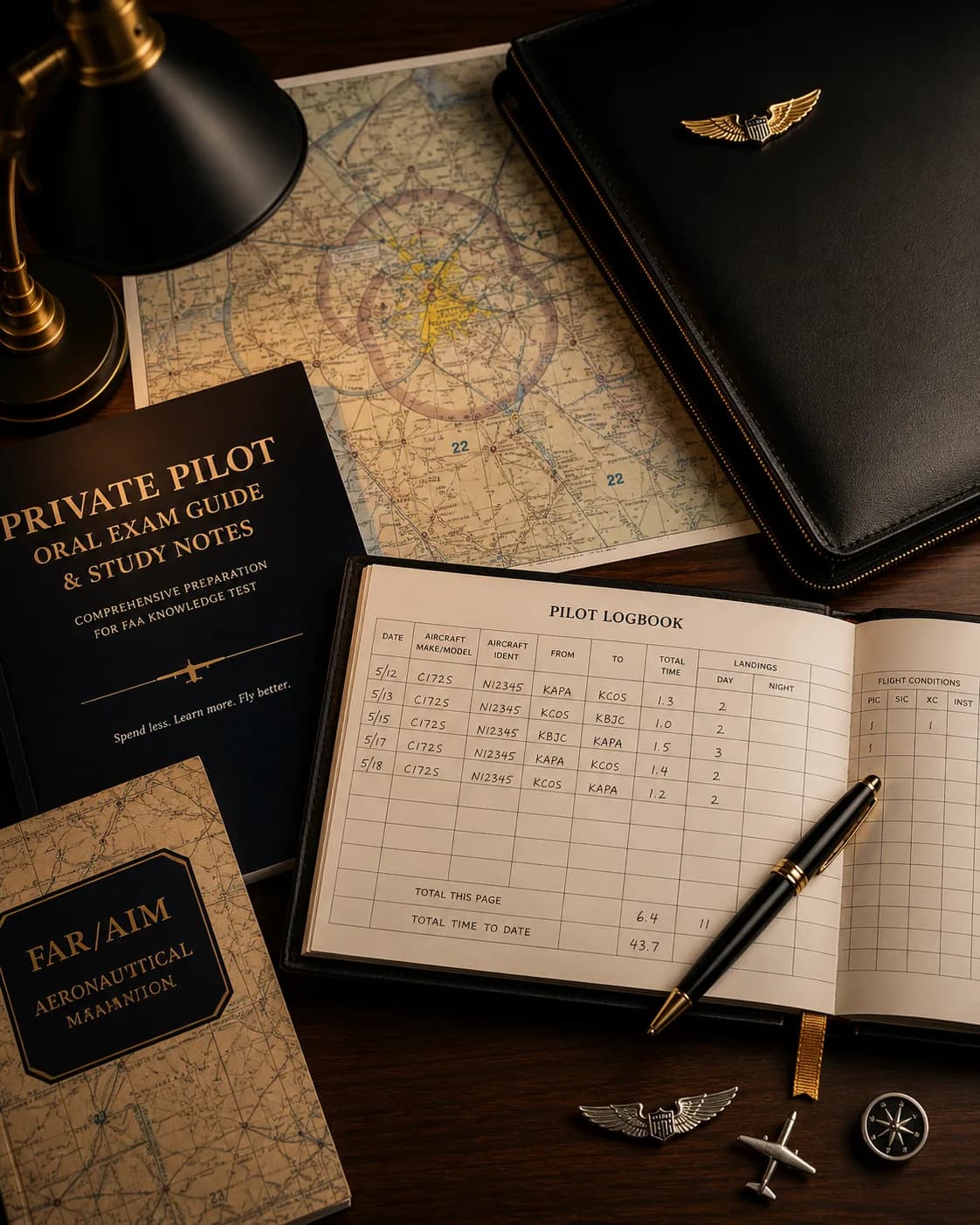
If you decide to continue, you already have your first entry in your logbook and a relationship with an instructor who has seen how you learn.
Understanding how to pay for flight school gets easier once you have a plan. Scholarships, pay-as-you-go lessons, careful use of credit, and choosing an instructor who bills honestly on Hobbs time all add up to a path that fits a real budget.
Book your discovery flight and take the first step. The costs are more manageable than you think, and the goal is more reachable than it looks from the ground.

Book a $160 discovery flight
You fly the airplane with an FAA-certified instructor beside you. No contracts, no blocks, billed on Hobbs time only.