How to Get Your Private Pilot License in California: Step-by-Step Guide
Discover exactly how to get your private pilot license in California, from the FAA medical certificate to your final checkride, with expert tips for every step.
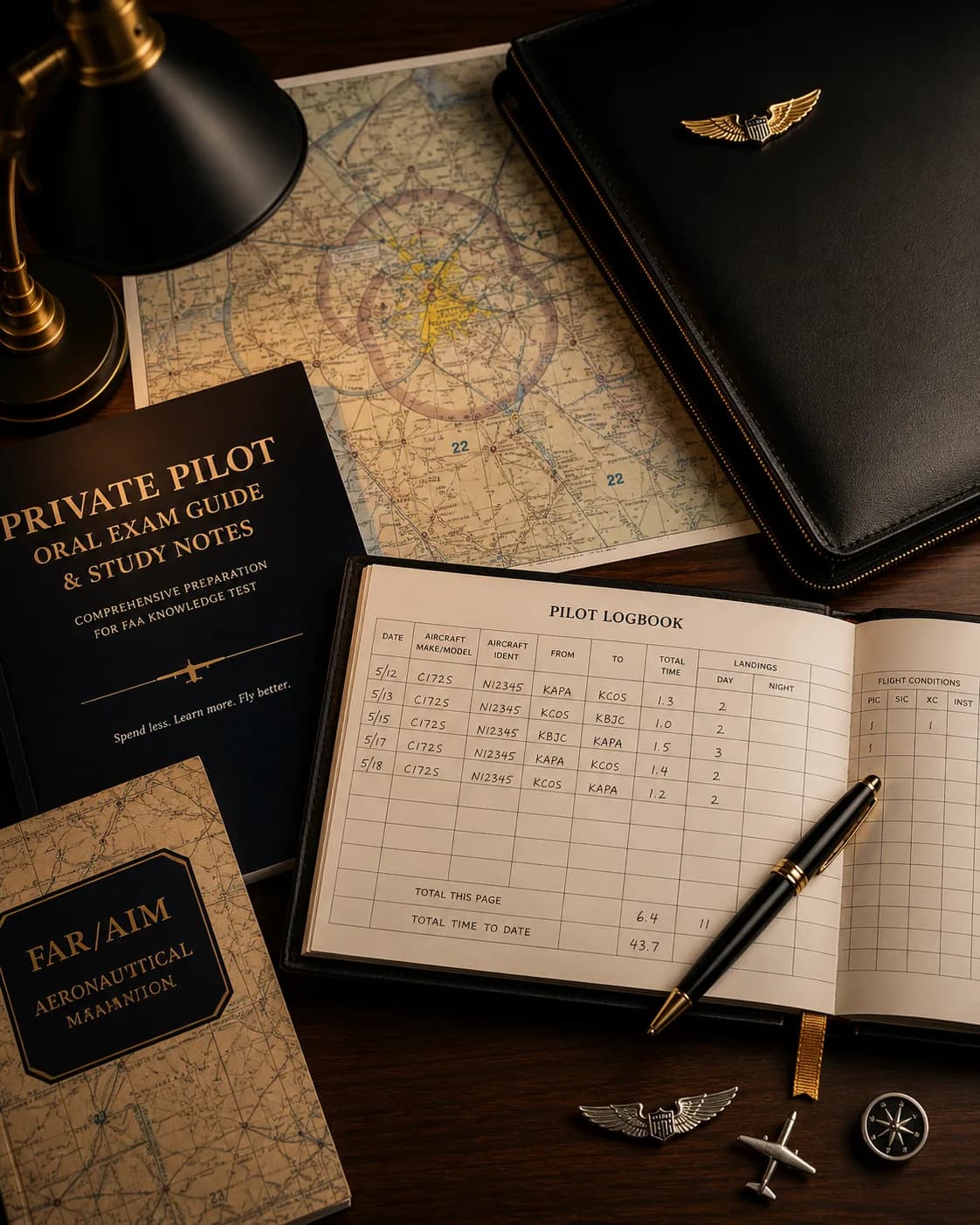
Learning how to get your private pilot license in California is one of the most rewarding journeys you can take, and with the right roadmap, it is far less complicated than most beginners expect. California's year-round flying weather, diverse airspace, and thriving aviation community make it one of the best states in the country to pursue this goal. Whether you dream of weekend flights over the Pacific coast or cross-country trips through the Sierra Nevada, this guide walks you through every requirement, every exam, and every flight hour you need to earn your wings.
What Is a Private Pilot License (PPL)?
A private pilot license, formally called a Private Pilot Certificate by the FAA, gives you the legal authority to act as pilot-in-command of a single-engine aircraft. You can carry passengers, fly across state lines, and explore the sky on your own schedule. However, you cannot charge money for flights under a PPL; that requires a commercial certificate.
The FAA sets the national standards for earning this certificate. California flight schools, including academies throughout the Los Angeles basin, the Bay Area, and the Central Valley, operate under those same federal rules. Therefore, knowing the FAA requirements is your starting point regardless of where in the state you train.
FAA Requirements for a Private Pilot Certificate
Before you book a single lesson, you should understand the core requirements the FAA sets out in 14 CFR Part 61. These rules apply to every student pursuing a private pilot license in California and across the entire United States.
Here is a summary of what you must meet:
- Age: You must be at least 16 years old to fly solo and 17 years old to receive your private pilot certificate.
- Language: You must read, speak, write, and understand English.
- Medical certificate: You must hold at least a Third-Class FAA Medical Certificate.
- Knowledge test: You must pass the FAA Private Pilot Aeronautical Knowledge Test with a score of 70% or higher.
- Flight hours: You must log a minimum of 40 flight hours (most students take 60 to 70 hours to reach checkride-ready proficiency).
- Solo requirements: At least 10 hours of solo flight time, including a solo cross-country flight of at least 150 nautical miles.
- Checkride: You must pass a practical exam (the checkride) with an FAA Designated Pilot Examiner.
Meeting each of these milestones is how you get your private pilot license in California and turn your aviation dream into a legal reality.
Step 1: Get Your FAA Medical Certificate
Your first concrete step is scheduling a visit with an FAA Aviation Medical Examiner, commonly called an AME. The Third-Class Medical Certificate is the minimum requirement for a private pilot, and it covers basic vision, hearing, cardiovascular health, and mental fitness standards.
You can find a certified AME near you through the FAA MedXPress system. Fill out FAA Form 8500-8 online before your appointment and bring your application number to the exam. Most Third-Class medicals take under an hour and cost between $75 and $150.
A few important points to keep in mind:
- Disclose any medications or medical history honestly. Omissions can cause serious legal trouble later.
- Many common conditions, including well-controlled diabetes and certain vision issues, can be accommodated with a Special Issuance.
- The Third-Class Medical Certificate is valid for 60 months if you are under 40, and 24 months if you are 40 or older.
Getting your medical certificate early is smart because it confirms you are medically eligible before you invest significant time and money in flight training.
Step 2: Choose the Right Flight School in California
California has hundreds of flight schools, so choosing the right one matters enormously. You want a school with well-maintained aircraft, experienced CFIs (Certified Flight Instructors), a structured curriculum, and a strong checkride pass rate.
When evaluating schools, ask these questions:
- Is the school an FAA-approved Part 141 school, or does it operate under Part 61?
- What is the school's average hours-to-checkride for PPL students?
- How modern and well-maintained is the training fleet?
- Does the school offer dedicated ground school, or do you study independently?
Part 141 vs. Part 61: Part 141 schools follow an FAA-approved structured syllabus and can allow students to take the checkride with a minimum of 35 hours (versus 40 under Part 61). However, Part 61 offers more scheduling flexibility. Many California students find that a structured Part 141 environment helps them progress faster and more affordably.
Aces Aviators Academy is built specifically for students who want an efficient, well-supported path to their private pilot certificate. With experienced instructors, modern training aircraft, and a curriculum designed around real student schedules, Aces Aviators gives you the local expertise to succeed.
Step 3: Start Ground School and Study for the Written Exam
Ground school covers the academic knowledge every pilot needs before flying safely. Topics include aerodynamics, weather theory, navigation, FAA regulations, airspace classifications, and aircraft systems. You can take ground school in person, through your flight school, or through an online provider.
Popular online ground school options include Sporty's Pilot Shop and King Schools, both of which offer self-paced courses specifically designed for the FAA knowledge test.
The FAA Private Pilot Knowledge Test contains 60 multiple-choice questions. You need to score at least 70% to pass, and the test is offered at FAA-approved testing centers throughout California. Most well-prepared students finish in under two hours.
Tips for passing the written exam:
- Complete your ground school course fully before scheduling the test.
- Take multiple practice exams under timed conditions.
- Focus extra time on weather interpretation and sectional chart reading, two areas where students commonly lose points.
- Your written test score is valid for 24 months, so schedule it reasonably close to your projected checkride date.
Understanding the material deeply, rather than just memorizing answers, also makes you a safer and more confident pilot in the air.
Step 4: Log Your Required Flight Hours
This is the heart of learning how to get your private pilot license in California: the actual flying. Your training will progress through several distinct phases.
Dual Instruction Hours
You begin flying with a CFI in the right seat guiding you through the basics. Early lessons cover aircraft control, takeoffs, landings, turns, climbs, and descents. As you improve, you move into stall recovery, emergency procedures, cross-country navigation, and night flying.
The FAA requires a minimum of 40 total flight hours for a PPL. Within those hours, you need:
- At least 20 hours of flight instruction with a CFI
- At least 10 hours of solo flight
- At least 3 hours of cross-country flight instruction
- At least 3 hours of night flight, including a cross-country flight of over 100 nautical miles
- At least 3 hours of instrument training (flying by reference to instruments only)
- At least 3 hours of checkride preparation within 60 days before your practical exam
Solo Flight Hours
Your first solo flight is a milestone you will remember forever. Your CFI endorses you to fly alone after demonstrating consistent proficiency. From that point, solo hours build your independence and decision-making skills.
Your required solo cross-country flight must cover at least 150 nautical miles total, with full-stop landings at a minimum of three points and one leg of at least 50 nautical miles between takeoff and landing points.
California's geography is a genuine advantage here. You can fly coastal routes, mountain corridors, or desert stretches, giving you a rich variety of conditions and scenery during your solo cross-countries.
Step 5: Pass the Checkride
The checkride, formally the Private Pilot Practical Test, is your final exam. It has two parts: an oral exam and a flight test, both administered by an FAA Designated Pilot Examiner (DPE).
The Oral Exam
The DPE will question you on aeronautical knowledge using the FAA Private Pilot Airman Certification Standards (ACS). Expect questions on weather analysis, cross-country planning, regulations, aircraft systems, and emergency procedures. This typically lasts one to two hours.
Prepare by reviewing your logbook, completing a mock oral with your CFI, and studying the ACS document thoroughly.
The Flight Portion
After the oral, you fly with the examiner. Expect to demonstrate:
- Preflight planning and aircraft inspection
- Normal and crosswind takeoffs and landings
- Slow flight and stall recovery
- Ground reference maneuvers
- Navigation and cross-country procedures
- Emergency scenarios
- Basic instrument maneuvers
If you are well-prepared, the flight portion feels much like a normal training flight. Stay calm, use your checklists, and communicate clearly with the examiner. A temporary discontinuance (or "pink slip") is not the end of the world; many successful pilots needed a second attempt at one or more areas.
How Long Does It Take to Get a PPL in California?
Most students training consistently (two to three lessons per week) complete their private pilot certificate in four to six months. Students who fly more frequently, or who attend an accelerated program, can finish in as little as two to three months.
Cost varies based on aircraft rental rates, instructor fees, and exam costs. In California, expect to budget between $10,000 and $15,000 for the full PPL process. Structured schools with efficient curricula often keep students closer to the lower end of that range by minimizing repeated lessons caused by inconsistent training.
Why California Is a Great Place to Earn Your PPL
California offers some of the best training conditions in the country. The mild climate means fewer weather cancellations than states in the Midwest or Northeast. The airspace diversity, from busy Class B airspace around Los Angeles and San Francisco to quieter Class D and Class G airspace elsewhere, prepares you for real-world flying situations.
Additionally, California has a massive aviation community. Fly-ins, flying clubs, and mentorship networks are abundant, so your journey to a private pilot certificate does not have to feel solitary.
Ready to Take the First Step?
Now that you know how to get your private pilot license in California, from the FAA medical certificate all the way through the checkride, the only thing left is to start. Every hour you wait is an hour you could be in the air building skills and logging time.
Aces Aviators Academy specializes in guiding California students through the PPL process efficiently and confidently. Our experienced instructors, structured curriculum, and supportive learning environment are designed specifically for people who are serious about earning their wings without wasting time or money. Contact us today to schedule a discovery flight and take your first step toward becoming a licensed private pilot.
Book a $160 discovery flight
You fly the airplane with an FAA-certified instructor beside you. No contracts, no blocks, billed on Hobbs time only.