How Much Does Flight School Cost in California? A Real Breakdown
Flight school costs in California range from $9,500 to $22,000 depending on aircraft, billing method, and instructor rates. Here is how to understand every line item before you spend a dollar.

How much does flight school cost in California is one of the first questions every aspiring pilot types into Google, and the honest answer is: it depends on a lot of variables that most flight school websites conveniently leave out. This post breaks down every real cost driver, explains where schools inflate the bill, and shows you how smart training choices can keep your total investment closer to the low end of the range.
The National Benchmark vs. California Reality
The FAA estimates that the national average cost to earn a Private Pilot Certificate under Part 61 is around $10,000 to $15,000. California, however, is not average. Aircraft rental rates, instructor salaries, and hangar costs are all higher here than in the Midwest or the South. Realistically, students training in Southern California should plan for a range of $10,000 to $18,000 for a private pilot certificate, depending on how efficiently they train and which school or instructor they choose.
That wide gap between $10,000 and $18,000 is not random. It is the result of specific cost drivers that you can actually control, once you understand them.
The Major Cost Drivers, Line by Line
Aircraft Rental: The Biggest Single Expense
Aircraft rental is typically 60 to 70 percent of your total training bill. In California, you will see Cessna 172 rental rates anywhere from $150 to $250 per hour, depending on the school, the aircraft's avionics, and how the billing is structured.
The billing structure is where many students lose money without realizing it. Some schools bill on Tach time, which measures engine RPM rather than clock time. Others bill on Hobbs time, which measures actual engine-on minutes. Hobbs billing is the honest standard because every minute you pay for goes in your logbook. Tach billing typically overstates your hours by 10 to 15 percent relative to Hobbs.
Some schools also require you to purchase large pre-paid blocks of flight time upfront. If you leave the school before using all the hours, refunds are often difficult to obtain. At Aces Aviators Academy, students are billed on Hobbs time only, so you pay for engine-on time that counts in your logbook, and pre-trip walkarounds, pre-flight briefings, and post-flight debriefs carry no extra charge.
Instructor Time: Fixed Rate vs. Hidden Markups
Instructor fees in California typically run from $75 to $90 per hour at larger flight schools, and that rate is sometimes bundled with aircraft rental in a way that makes it hard to compare. Independent FAA-certified flight instructors often charge less because they are not carrying the overhead of a large facility.
The FAA minimum for a Private Pilot Certificate is 40 flight hours, but the national average student needs 55 to 65 hours before they are ready for the checkride. That gap between 40 and 60 hours of instruction time adds up quickly. At $75 per hour of instructor time, going from 40 hours to 60 hours costs an extra $1,500 in instruction alone, not counting aircraft rental.
Instruction at Aces Aviators is $40 per hour. That is a meaningful difference when you are logging 50 to 60 hours over the course of your training.
Ground School: Do Not Skip It, But Choose Wisely
Ground school covers the aeronautical knowledge you need before your FAA written exam and your checkride oral. It is non-negotiable. However, how much you pay for it varies widely.
Traditional classroom ground school at a large flight school can cost $500 to $1,500. Online self-study courses from providers like King Schools or Sporty's run $150 to $300 and cover the same material. Many students combine a good online course with a few hours of one-on-one ground instruction from their CFI to fill gaps. At Aces Aviators, ground instruction is available by the hour at the same instructor rate, so you pay for exactly as much or as little as you need.
The FAA Written Exam Fee
Before you fly your checkride, you must pass the FAA Airman Knowledge Test (the written exam). The fee to sit for the exam is currently around $175, and you pay it to a third-party testing center. You take this test once, so thorough preparation is essential. Many students who rush this step end up paying $175 again for a retake.
The FAA Third-Class Medical Certificate
You need at least a Third-Class medical certificate from an FAA Aviation Medical Examiner (AME) before you can solo. The cost of an AME exam typically runs from $80 to $200 in California, depending on the examiner and whether any follow-up paperwork is needed. You can use the FAA MedXPress system to fill out your application before the appointment. If you have any significant medical history, budget extra time and potentially extra fees for special issuance review.
The Checkride: Examiner Fees and DPE Rates
The practical test, or checkride, is conducted by an FAA Designated Pilot Examiner (DPE). In California, DPE fees for a Private Pilot checkride currently range from $600 to $900, and demand often outpaces supply, especially in Southern California. This is a one-time fee if you pass; if you do not pass a portion of the checkride, you pay for a retest on that portion, which can run $300 to $500.
This is another reason efficient, thorough training matters. The money you invest in proper preparation saves you more than it costs.
Headset, Books, and Gear
Many students underestimate the cost of personal equipment. Here is a realistic list:
- Aviation headset: $200 to $1,100 (a solid passive headset like the Rugged Air RA200 runs around $100 to $200; ANR headsets from David Clark or Bose run $300 to $1,100)
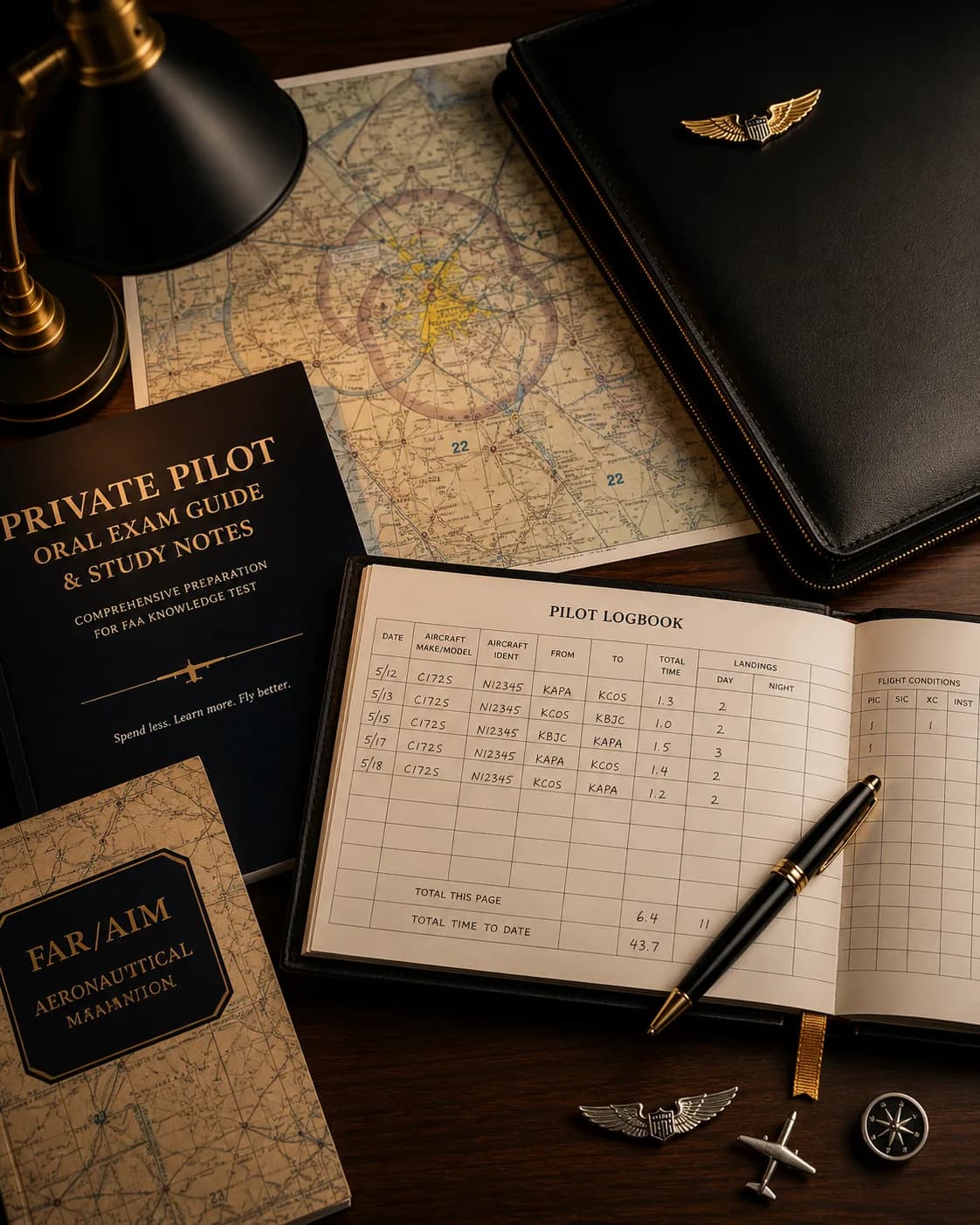
- FAA Aeronautical Information Manual (AIM) and FAR/AIM: $20 to $30
- Sectional charts and plotter: $15 to $30
- Kneeboard and logbook: $20 to $40
- ForeFlight or aviation app subscription: $100 to $200 per year
- iPad (if you do not already own one): $300 to $500
Total personal gear budget: plan for $400 to $800 on the low end, more if you choose premium equipment.
Why Big Flight Schools Pad the Bill
Large Part 141 flight schools in California often have higher apparent efficiency (structured syllabi, guaranteed minimums) but they also carry significant overhead: facilities, simulators they must recoup costs on, marketing departments, and administrative staff. That overhead gets built into aircraft rental rates and ground school fees.
Additionally, some schools charge for things that independent instruction does not. Ground briefing fees, flight planning fees, fuel surcharges billed on top of the hourly rate, and mandatory block purchases are all common at larger operations. When you total those line items, the advertised hourly rate stops looking so simple.
Part 61 training, which is the framework Aces Aviators uses, is more flexible. The training is tailored to your schedule and your pace. There is no requirement to purchase minimums, no mandatory ground school package, and no block rental requirement. You pay for what you actually use.
How the Math Changes With Hobbs Billing and Lower Rates
Let's build two realistic cost scenarios for a student who finishes in 60 hours of flight time, which is close to the California average.
Scenario A: Large Part 141 School
- Aircraft rental at $200/hr on Tach time (effective Hobbs hours closer to 66): $13,200
- Instructor at $80/hr x 60 hours: $4,800
- Ground school package: $900
- Written exam: $175
- Medical exam: $150
- DPE checkride fee: $750
- Gear: $600
- Total: approximately $20,575
Scenario B: Independent CFI + Club Aircraft (Aces Aviators model)
- Cessna 172 with GPS at $160/hr wet on Hobbs, 60 hours: $9,600
- Instruction at $40/hr x 60 hours: $2,400
- Ground instruction as needed, 10 hours at $40/hr: $400
- Written exam: $175
- Medical exam: $150
- DPE checkride fee: $750
- Gear: $500
- Total: approximately $13,975
That is a difference of roughly $6,600, just from billing structure and instructor rate. If the student trains on a Cessna 152 at $120/hr wet instead of the 172, the aircraft rental drops to $7,200, bringing the total to around $11,575. That is why the range matters so much.
You can also reduce your aircraft time by using the Redbird FMX full-motion simulator, available at $80 per hour. Simulator time counts in your logbook for instrument procedures and certain maneuvers, and it is significantly cheaper than flying. Using the sim strategically for instrument work and emergency procedure practice can save several hours of aircraft rental.
What the Total Range Really Looks Like for California Students
Based on everything above, here are realistic ranges for training in Southern California under Part 61:
- Optimistic (efficient student, Cessna 152, sim use): $9,500 to $12,000
- Typical (average hours, Cessna 172, good prep): $13,000 to $16,000
- Higher-cost (more hours needed, premium aircraft, big school overhead): $18,000 to $22,000
These ranges assume a private pilot certificate only. Adding an instrument rating later typically costs $8,000 to $15,000 additional, and a commercial certificate adds another $15,000 to $30,000 on top of that. You can review those program structures in detail at Aces Aviators' flight training programs page to understand what each rating involves.
Tips to Keep Your California Flight Training Costs Down
- Fly consistently. Students who train two or three times per week progress faster and forget less between lessons. Slow, sporadic training is the number one reason students exceed the average hour count.
- Study before every flight. Time in the cockpit is expensive. Show up prepared so you are practicing, not learning from scratch in a $160-per-hour airplane.
- Use the simulator for instrument work. It is cheaper, and the FAA allows up to 2.5 hours of AATD simulator time to count toward your private pilot certificate.
- Choose Hobbs billing. Ask any school or instructor you consider: "Do you bill on Hobbs or Tach?" If the answer is Tach, factor in the effective markup.
- Do not pay for what you do not use. Block purchases and pre-paid ground school packages benefit the school, not you, if your needs change.
If you want to understand the pricing structure at Aces Aviators before committing to anything, the pricing page lays out exactly what instruction and aircraft rental cost, with no hidden add-ons.
The Best First Step: A Discovery Flight
The single best way to evaluate both your interest and your potential flight costs is to take a discovery flight before signing anything. At Aces Aviators Academy, a discovery flight costs $160. It gives you real flight time with a certified instructor, a realistic feel for how training works, and the ability to ask specific questions about cost, pace, and aircraft availability before you commit to a training program.
Knowing how much does flight school cost in California is useful. Knowing what your specific training will cost, based on your schedule, your aircraft choice, and your instructor rate, is essential. The discovery flight is how you get those specific answers.
Ready to get started? Book your discovery flight or contact us at info@acesaviators.com to ask questions before you commit to anything.

Book a $160 discovery flight
You fly the airplane with an FAA-certified instructor beside you. No contracts, no blocks, billed on Hobbs time only.